IHistory
Below Volgograd the Volga stops being a river in the ordinary sense. It breaks into arms and channels, spreads tens of kilometres wide, and at last enters the Caspian not by a mouth but by a delta — one of the largest in Europe.
For four centuries that delta was the country’s fish yard.
The chief fish was sturgeon: beluga, Russian sturgeon, stellate sturgeon, sterlet. Beluga grew to sizes nobody now believes: fish over a tonne were not legend but merchandise, and such were caught within living memory.
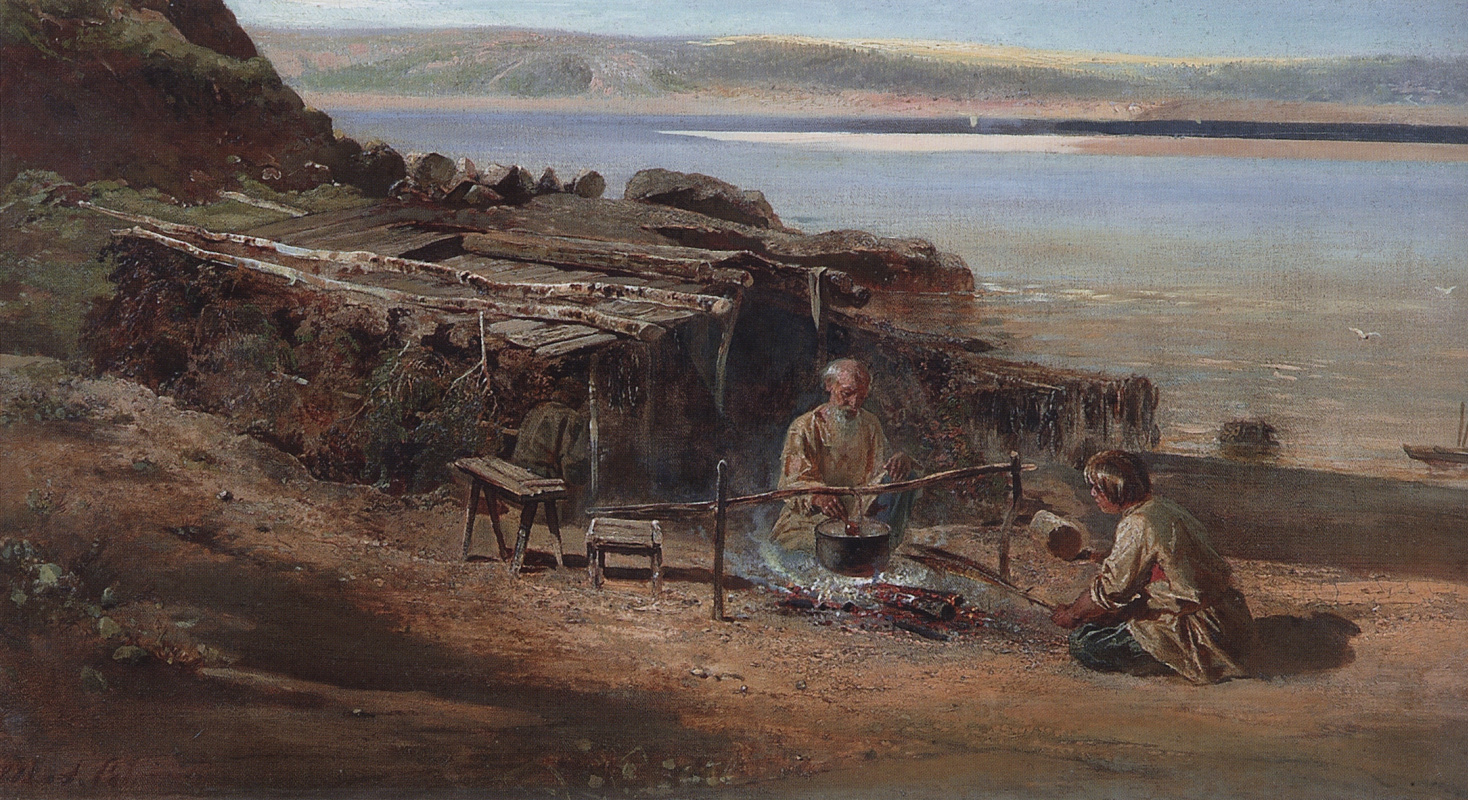
The fishery was called a vataga — not a vessel but a whole works on the bank: seines hundreds of fathoms long, ice houses, salting sheds, a crew of fifty. Vatagas stood the length of the lower Volga, and Astrakhan lived by them.
Caviar went from here to Petersburg, to Moscow, to Europe. By the early twentieth century Russia supplied nine tenths of the world’s black caviar, and nearly all of it was Caspian.
Then the river was dammed. The Volga cascade cut the sturgeon off from spawning grounds that lay upstream — and they ran a thousand kilometres from the sea to reach them. A fish that lived a century and matured at twenty was gone in two generations.
IIWhat is there now
Sturgeon may not be taken. Not by the trade, not by anglers, not at all. The ban holds, and all black caviar in lawful sale comes from farms, not from the river.
But the story did not end there, and the second half is more recent.
Roach. A fish that meant to Astrakhan roughly what cod meant to Newfoundland: cheap, plentiful, dried for the whole year. Its stock collapsed, and since 2024 recreational roach fishing on the Volga within Astrakhan Region, in Kalmykia and in the Caspian has been closed entirely. The ban runs through 31 December 2026.
So on the Lower Volga today both of the fishes it was famous for are forbidden.
The rest is alive. The delta remains one of the richest places in Russia for variety: carp, pike-perch, catfish, asp, bream, rudd, perch, pike. And sabrefish — the narrow silver sabre the locals take by the sackful and visitors often do not know at all.
In spring the delta floods; in summer it grows over with lotus — pink fields across tens of hectares, and that is not postcard decoration but a genuine obstacle to a boat.
IIIWhat is taken here
Wild carp. In the delta this is not the sluggish pond fish but a strong river animal. It takes boilies, sweetcorn, cake. The main prize for those who come for a trophy.
Pike-perch. Holds in holes and on drop-offs, takes jigs and live bait. In autumn it hunts in packs.
Catfish. The Volga catfish grows to sizes no longer met with in Europe. It is fished with the kvok, an old implement struck against the water to call the fish by sound. Its daily limit is counted separately from the rest.
Asp. Smashes into baitfish at the surface with a splash audible far off. Taken on spinning gear worked fast.
Sabrefish. Shoaling, narrow, silver. It runs high in the water and takes a fly, a small spinner, a maggot trotted down. A fish hardly written about, and good fun to catch.
IVHow it is taken
Recreational fishing
The rules are not complicated, but there are four of them and each is worth knowing in advance.
No licence is needed. Recreational fishing on the Volga is free and open. Payment is only for permits on particular stretches given over to organised fishing — a special case, not the general rule.
The daily limit is 10 kilograms per person in Astrakhan Region. Or one fish, if it weighs more than ten. The limit varies by region: further up the Volga it is half that, so it must be checked for the specific region.
Spawning closure: 16 May to 20 June 2026. During those days pike, pike-perch, catfish, crucian, bream and the rest are closed everywhere. The dates shift from year to year and differ between regions — checking before travelling is obligatory.
Roach is banned through 31 December 2026, sturgeon indefinitely. Not restricted — banned.
As for gear: spinning, float, ledger, feeder, fly. Nets and any straining gear are forbidden to anglers. The hook allowance is no more than ten per person.
And one piece of advice that is not in the rules but comes from practice. The delta is a maze. Hundreds of channels, all alike, banks low, no landmarks. Going in without a local or good navigation is unwise: getting lost there is easier than it looks from the bank.
The trade
The trade on the Lower Volga survives, but it is not what fed Europe. Common fish are taken — bream, pike-perch, carp, roach before the ban — by seine and net, under quota, on allotted stretches.
The sturgeon business has moved to breeding. Fry are released into the river from hatcheries, and market fish and caviar come from pens. Wild Caspian sturgeon remains banned and protected.
Fishing rules for the Volga-Caspian fishery basin — daily limits and closed seasons. · Volga-Caspian Territorial Directorate of the Federal Fisheries Agency — angler’s notice, 2026 spawning closure dates. · The recreational roach ban extended through 31 December 2026. · Historical figures on the sturgeon fishery and Russia’s share of world black caviar from pre-revolutionary fishery returns.