IHistory
The White Sea is almost closed: a narrow Throat joins it to the Barents Sea, and the rest is shore. Its area is some ninety thousand square kilometres, its average depth sixty-seven metres. The water is saltier than a river and fresher than the ocean, and for half the year — from October or November to April or May — it stands under ice.
Its coasts are called by old names, and the names are not geography but history: the Tersky, the Kandalaksha, the Karelian, the Pomor coast. The people who lived here called themselves Pomors — those by the sea.
Grain grew poorly on these shores, and people lived not from the land but from the water. Salmon was taken at the tonya — a fishing station on the shore with its traps and the fisherman’s hut. Herring, navaga, cod, seals. Salt was boiled here too, in the saltworks, and its chief supplier for all of Russia was the Solovetsky Monastery, founded in 1436 on islands in the middle of the sea. Salt and fish held each other up.
From the seventeenth century the Pomors went to the Murman — the northern shore of the Kola peninsula — for cod. By the start of the nineteenth century between five hundred and a thousand vessels went there each season, bringing back ten to seventeen thousand tonnes of salt cod and fifteen hundred tonnes of cod oil.
The Pomors went further still, to Norway. From 1740 until the revolution the Pomor trade ran: Russian vessels carried grain north and brought fish back. In the nineteenth century more than three hundred Pomor ships came to the Norwegian coast each summer, and for that trade the two peoples put together a language of their own, Russenorsk — half Russian, half Norwegian. It was spoken for a century and a half, and was good for nothing else.
From here too, from a village near Kholmogory, came the son of a Pomor, Mikhail Lomonosov, who as a youth went out fishing with his father.
IIWhat is there now
The White Sea is one of the few places in Europe where true Atlantic salmon still lives off the coast. It runs into the rivers of the Tersky coast, into the Kem, the Onega, the Northern Dvina, the Mezen.
But the great change of recent decades came from the other end of the country. In the mid-twentieth century pink salmon was brought to the Kola peninsula from the Far East. It took hold, and in odd years its runs into the rivers of the White and Barents seas can be enormous. It is an awkward neighbour for the Atlantic salmon, and scientists on both sides of the border watch it with concern.
The ice here is unusual. The sea is tidal: off the southern shores the water rises a metre, and in Mezen Bay up to ten metres, the most anywhere on the White Sea. On such a sea the ice does not lie still — it breathes: the flood lifts and breaks it along the shore, the ebb lets it down. For the winter angler this is the White Sea’s chief danger.
In summer beluga whales come into the shallows off Solovki, and people travel to see them as once they travelled on pilgrimage.
The cod the Pomors took in exchange for grain in northern Norway belongs to the same stock that goes to spawn every winter at Lofoten. One fish fed both shores.
IIIWhat is taken here
Salmon is the royal fish of the Pomor coast and the chief reason anyone comes here with tackle. It is fished in the rivers, by permit, and often for release.
Navaga. A small northern relative of the cod, a fish of winter. It comes inshore in the cold, spawns under the ice in December and January, and is fished through the ice. In summer navaga is soft and does not keep, which is why its fishery was always a winter one.
White Sea herring. Small and fat, a local stock rather than an ocean one. It used to be salted at the monastery’s fishing stations, and Solovetsky herring was famous across the North.
Smelt and flounder at the river mouths and on the shallows; cod — the White Sea kind, smaller than the Barents Sea fish.
And pink salmon — the incomer from the Far East, of which in odd years there is more than of everything else.
IVHow it is taken
Recreational fishing
In Russia recreational fishing is simple until it comes to salmon. In order:
Fishing is free and open. No licence is needed for the angler — except on licensed fishing stretches, which are assigned to someone and where fishing is paid for.
Salmon — only on licensed stretches and only by permit. Lures must be artificial: rod, spinning or fly. Many stretches are catch-and-release. In Murmansk region a permit for the state fishery agency’s stretches costs 280 roubles for local residents, 350 for Russian citizens and 1,800 for foreigners; on the private stretches of the Tersky coast the prices are of another order.
In autumn the river mouths are closed. In Murmansk region, from 1 September to 30 November, fishing within 250 metres of a river mouth is forbidden: that is when the salmon go up to spawn.
Navaga — in winter, through the ice. Ice fishing for navaga is the Pomor coast’s great winter fishing: Kem, Belomorsk, Onega Bay. Daily limits and closed seasons are set by the fishing rules for the Northern fisheries basin — check them before you go, they change.
And above all, the ice. On a tidal sea it moves twice a day. Along the shore there are cracks and open leads that were not there in the morning. Go out on the ice with locals who know where it holds, and never go alone.
The trade
The fishery on the White Sea today is small and rests on what it rested on in Pomor times: navaga in winter, herring, inshore fish. Little salmon is taken commercially, and under strict account — its chief value has long been that it is alive and runs into the rivers.
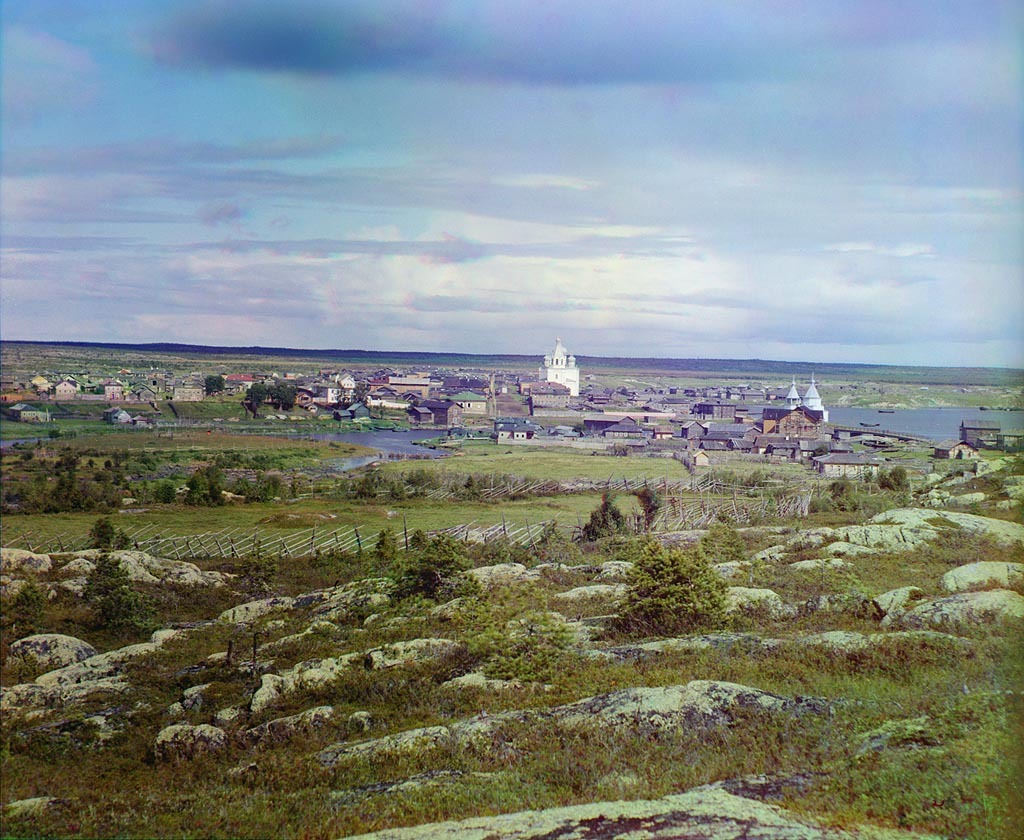
Physical geography of the White Sea — area, depths, ice, salinity, the tides of Mezen Bay. · T. A. Bernshtam, “The Pomors: formation of the group and its economy” — fisheries, the Murman cod fishery of the 17th–19th centuries. · Solovetsky Monastery — founded 1436, saltworks and fisheries. · History of the Pomor trade with Norway (1740–1917) and the Russenorsk language. · Murmansk branch of Glavrybvod — licensed stretches and permit prices for Atlantic salmon. · Fishing rules for the Northern fisheries basin (Russian Ministry of Agriculture order No. 292 of 13.05.2021). · Sergei Prokudin-Gorsky, Kem, 1916, Library of Congress.